


What Is the Difference Between Complete and Complementary Cat Food?

You're not the only one who has ever stood in the pet food aisle and looked at labels that said things like "complete," "complementary," "balanced," and "feed occasionally." Many cat owners find it hard to tell the difference between complete and complementary cat food. The packaging can seem like it's written in a different language.
The hard part is that both kinds of food can look, taste and cost the same amount. But they are very different in terms of nutrition for your cat. If you feed your cat the wrong food as a main meal, especially for a long time, it can cause health problems and nutrient deficiencies, even if your cat seems happy and healthy at first.
So let's put it all in simple terms: what is complete cat food, what is complementary cat food, how are they different, and how do you use both of them correctly to keep your cat healthy?
What Is Complete Cat Food?
Complete cat food is food that has everything your cat needs to stay healthy when it is the main diet. This means it has the right amount of:
-
Protein, such as taurine, which is an important amino acid
-
Lipids and fatty acids
-
Vitamins
-
Minerals
-
Calories (energy)
If a food is labelled as "complete" or "complete and balanced," it meets recognised standards for pet nutrition and can be fed to your cat every day as their only food.
Why Complete Food Matters
Cats are obligate carnivores, which means they need certain nutrients that come mostly from animal sources. Taurine is one of the most important. Cats can't make taurine on their own like dogs can. If they don't get enough of it, it can cause serious problems like heart disease, vision loss, and problems with reproduction.
Complete cat food is carefully made so that these gaps don't happen. Even the simplest-looking kibble or wet food has been carefully calculated to make sure that nothing important is missing. If you want to feel safe, complete food is your cat's safety net for nutrition.

What Is Complementary Cat Food?
You should not feed your cat complementary cat food by itself. It should be fed with a full diet. It might look just as good, or even better, but it doesn't have all the nutrients your cat needs to stay healthy for a long time. Instead, it should:
-
Increase moisture intake
-
Give more protein or texture
-
Serve as a treat or a topping
Here are some foods that go well with each other:
-
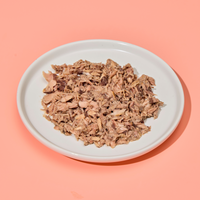
Plain chicken or tuna with gravy
-
Pouches with only one protein
-
Soups and broths
-
Some products that are raw or freeze-dried
These foods usually put taste and ease of use ahead of nutritional balance.
Why Complementary Food Exists
Cats can be picky about what they eat, and foods that go well with them tend to smell and taste better. They are especially helpful for:
-
Getting picky cats to eat
-
Giving sick or recovering cats something they want
-
Making things better by adding variety
Keep in mind that "natural" or "high meat content" doesn't always mean "complete."
Why Feeding Complementary Food Alone Can Be Risky
A lot of well-meaning cat owners make mistakes here. A complementary food could be made up of only chicken breast, which sounds great, but chicken alone doesn't give a cat everything it needs. Feeding only complementary food for a long time can lead to:
-
Not enough taurine
-
Imbalances in calcium and phosphorus
-
Lack of vitamins
-
Weak teeth or bones
-
Problems with the heart and vision
These problems don't come up all of a sudden. A cat may seem perfectly fine for months, which is why the problem often goes unnoticed until it has already caused a lot of damage.
Why Complementary Food Isn’t “Bad”
People often think bad things about complementary food, but they shouldn't. It can be a great addition to your cat's diet if you use it the right way. Some real benefits are:
-
Hydration: Many cats don’t drink enough water. Wet complementary foods help boost fluid intake.
-
Appetite stimulation: Good for older cats or cats that are getting better from being sick.
-
Mental stimulation: Different textures and flavours make meals more fun.
-
Bonding: Giving your cat special treats can help you get closer to each other.
The problem isn't the complementary food itself; it's using it as the main meal.
The Key Differences at a Glance
Here’s a simple table to show how complete and complementary cat foods compare:
|
Feature |
Complete Cat Food |
Complementary Cat Food |
|
Nutritionally balanced |
Yes |
No |
|
Can be fed as main diet |
Yes |
No |
|
Contains all essential vitamins & minerals |
Yes |
Not always |
|
Often labelled “complete” or “complete & balanced” |
Yes |
Usually says “complementary” |
|
Best used for |
Daily meals |
Treats, toppers, variety |
|
Risk if fed alone long-term |
Low |
High (nutrient deficiencies) |
Which One Is Better?
This is the wrong question, and that's where most of the confusion comes from."Which one fits this role in my cat's diet?" is a better question. Food that is complete is the base of nutrition. Complementary food means support, variety, and fun.
When used together in the right way, they can really help your cat have a more balanced and satisfying feeding schedule.
Can You Mix Complete and Complementary Cat Food?
Yes, and a lot of cat nutritionists say it's a good idea. This is what a healthy and common approach looks like:
-
Use complete food as the base (wet, dry, or a mix of both)
-
Food that goes well with other food, like a topping, a treat, or an add-on
For instance:
-
Eat all of your wet food for breakfast.
-
Full dry food for grazing
-
A spoonful of chicken or broth in the evening to go with it
You're on the right track as long as most of your calories come from whole foods.