

Understanding the Different Textures of Wet Cat Food

If you own a cat, you know what to do. You find a brand of food that has good ingredients, tastes good to your cat and is in your price range. You open the lid, show off the food and... your cat sniffs it once, looks at you with deep disappointment and walks away. Most of the time, the taste isn't the problem. It's the feel.
Cats like to touch things. Papillae, which are tiny, backwards-facing hooks made of keratin, cover their tongues. This makes them very sensitive to the mouthfeel of their food. Different prey in the wild gives you different physical experiences, like the crunch of small bones or the fibrous pull of muscle meat. In the world of home goods, manufacturers try to recreate these experiences with a huge range of textures.
The Classic Pâté
Pâté is the most common and traditional texture for wet food. It is a smooth, mixed mash that usually keeps the shape of the can when turned upside down.
The Experience
Pâté is thick and wet. It is often the most nutrient-dense option because it is mixed together. This is because it can fit more protein and healthy fats into a smaller space than chunkier foods with gravy.

What Is It Best For?
Pâté is a great choice for lickers or cats that like to lick their food instead of chewing it. It is also a favourite among older cats who may be missing teeth or have sensitive gums because they don't have to do anything to eat it.
The bad thing is that some cats think it's boring or hard to pick up if it's too sticky, and they often push the mound around the plate until it hits the rim.
Gravy Lovers: Shreds, Flakes and Chunks
This type is made up of small pieces of protein that are floating in a liquid base. The words used here can be confusing, but the differences are clear:
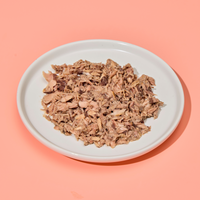
- Shreds: Long, thin pieces of meat that look like pulled pork or shredded chicken. These have a stringy texture that is similar to the natural fibers in muscle meat.
- Flakes: Flakes are flat, thin pieces of fish or chicken. This happens a lot in canned seafood, and it's like how a fish fillet naturally breaks apart.
- Chunks: Pieces of meat that are either cubed or rounded. Most of the time, these are reformed meat, which means the protein is ground up and then shaped into even bites.
Why Gravy?
The gravy or broth that surrounds these textures makes them smell very good. Cats are attracted to smells, and the moisture content in these cans is usually higher than in pâtés, which helps keep them hydrated.
The Gravy Licker Problem
A lot of pet owners say that their cat drinks all the gravy but leaves the meat chunks behind. This means that the cat likes the taste, but maybe doesn't like the way the chunks look or how hard they are to hold.
The Middle Ground: Minced and Ground
Minced food is the goldilocks solution if Pâté is too smooth and shreds are too big. Minced food is made up of tiny pieces of protein, usually in a light gravy or juice.
The Experience
It gives cats who like to feel like they're eating something big a little grit and texture, but the pieces are small enough that they don't have to chew very hard.
Trick for Texture
Cats with flat faces, like Persians or Himalayans, can usually pick up minced food better than big, slippery pieces.

Morsels and Gravy
This texture is often sold as morsels in savoury sauce, and it has small, soft pillows of meat. These pieces are softer than regular chunks and are made to break apart easily when they touch the tongue.
The Appeal
The sauce in these recipes is often thickened with starches (like tapioca or potato starch), which makes it feel smooth in the mouth and makes many cats want to eat it.
How Is This Attractive To Cats
This texture is great for cats who don't drink a lot of water because there is so much liquid compared to solid.
We usually think about where the protein comes from, but how a meal looks is very important for a cat's mental health. A cat that is picky about texture might choose a cheap chicken shred over a fancy duck pâté just because the way they interact with the food feels more natural to them.
Changing the texture of your cat's food can be just as helpful as changing the flavour if they seem bored with their routine. Giving a range of shapes, from the smoothness of a mousse to the density of a classic loaf, adds sensory interest that mimics a more varied natural hunting environment.
Mousse and Soufflé: The High-End Experience
Mousses and Soufflés are newer to the market than pâtés, and they are even lighter and fluffier. They are often whipped or aerated to make them look like clouds.
The Target Audience
People often use these for kittens who are switching from milk to solid food or as treat meals. They taste great and are easy to lick up.
The Topper Strategy
If cats won't eat, putting a spoonful of creamy mousse on top of a regular pâté can help them start their meal.

How To Find Out What Your Cat Likes
Try a texture experiment if your cat is picky about what it eats. Put three small bowls next to each other: one with a smooth pâté, one with shreds in gravy and one with minced meat. Look at the following:
- The Approach: Which bowl do they smell first?
- The Technique: Do they use their tongue to lick the food (pâté/mousse) or do they use their teeth to hook it (shreds/chunks)?
- The Result: Which bowl is done, and which one only has liquid left?
You can shop much better once you know how your cat likes to eat mechanically. If they are a lapper, look for mousses, pâtés and bisques. If they like to crunch or hook, look for shreds, flakes and hearty stews.
Outside Of The Can
The best texture for wet cat food is whatever your cat will eat. You can cut down on waste, save money on cans that your cat won't eat and make mealtime the best part of your cat's day by paying attention to the food's shape instead of just the label's protein count. The right texture can make a picky cat happy, whether it's a smooth mousse or a chunky stew.